

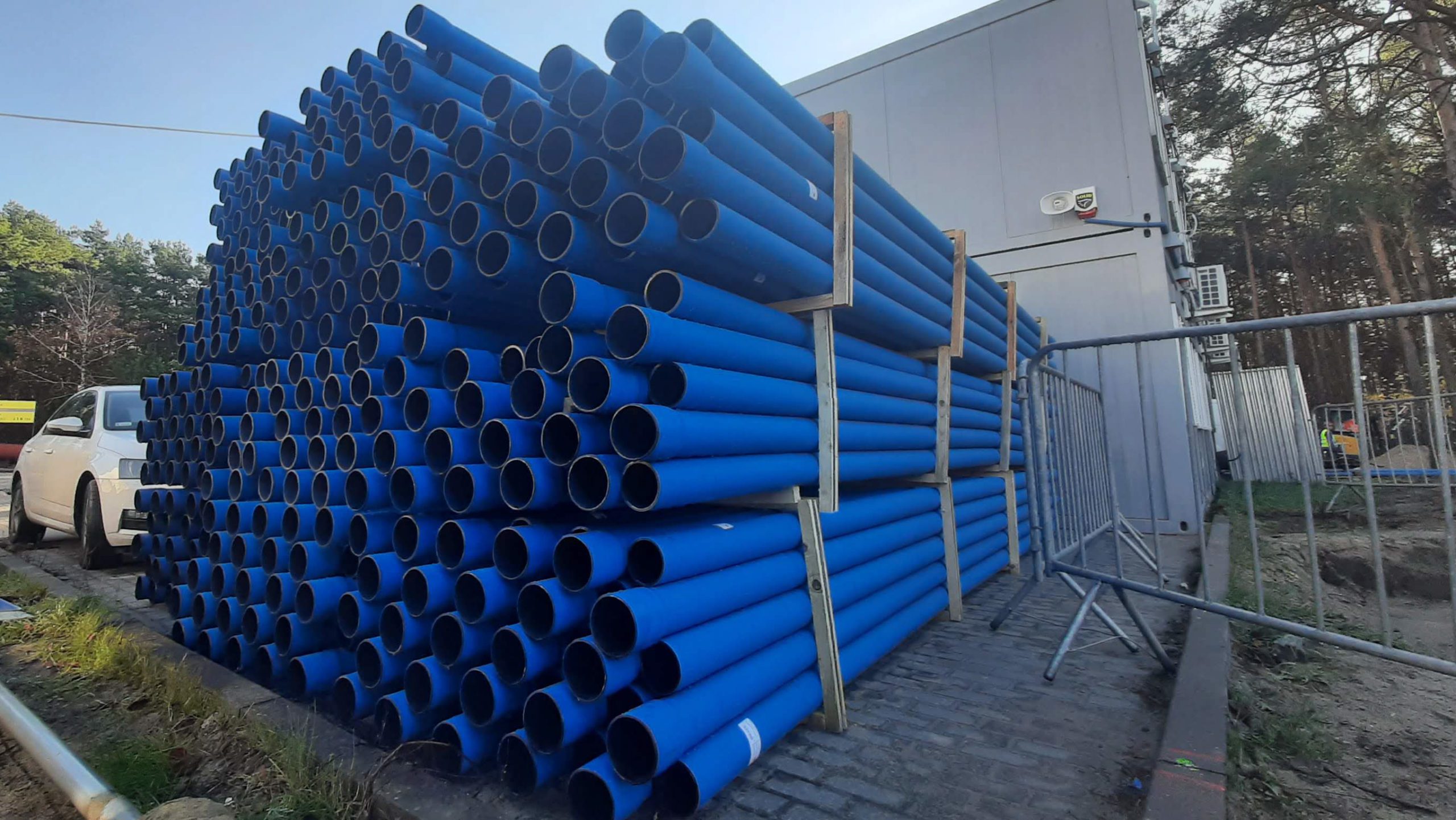
Construction work is underway at the WSS complex in Włocławek, marking the initial and crucial phase of preparations before the buildings can be erected.
On 30 June 2021, a contract worth over 155 million zloty was signed for construction work as part of the first phase of the investment project on the hospital grounds. Over the next two years, buildings B4 and B4A, along with associated technical buildings and landscaping, will be constructed. The complex will include a dedicated area, or “hot zone,” comprising a landing pad for the air ambulance service, an emergency department, and the main operating block. The primary objective is to create a centralised area providing life-saving care, eliminating the need to transport patients from the emergency department to other parts of the hospital. Operating rooms will also be located within the same building.
In place of the demolished building, a new building will be constructed, comprising five above-ground floors and one underground level. The B4A link will be one above-ground floor taller than the B4 building. Wing B4 will connect to wing B1 on its western side via the B4A link. The project includes the installation of an LPR helipad on the roof of wing B4, replacing the existing helipad, which will be decommissioned, located on the roof of building B13.
In addition to the above, buildings for oxygen storage and a porter’s lodge will be constructed, and the external networks will be upgraded, along with landscaping of the site.
On 21st September 2021, the first sod was cut, although preparatory work had already been underway since 14th July. The initial phase of the works typically involves less visible, but essential elements for the ongoing operation of the hospital and the new buildings, namely the electrical, water, sewage, and telecommunications networks, as well as medical gas systems.
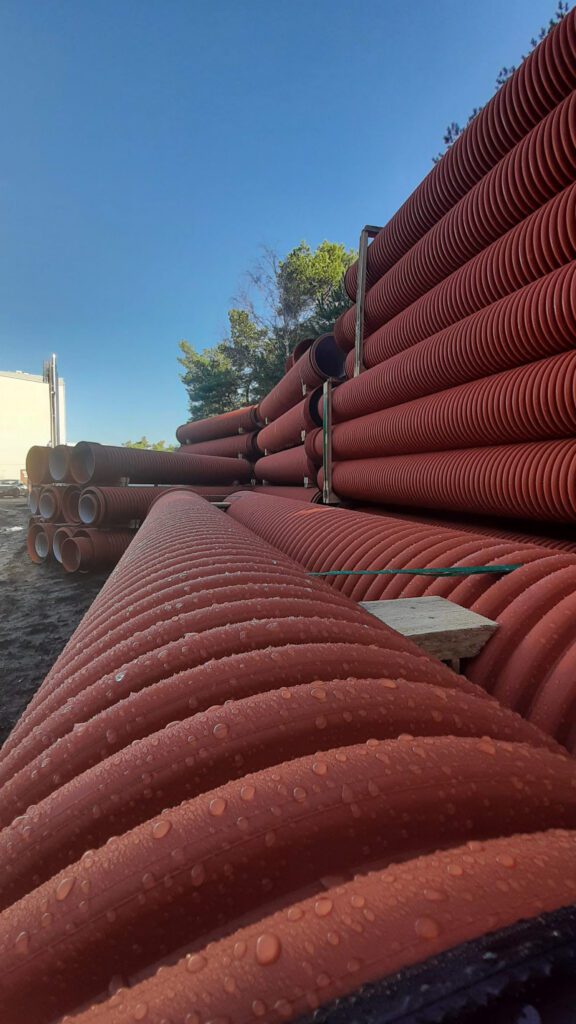
It is often overlooked that a hospital is not simply buildings, staff, and patients; it is a vast, constantly operating system, the components of which must be powered by substantial resources. There is a need for drainage, potable and technical water storage, telecommunications systems, electricity, and backup power sources. Beneath the smooth surfaces of the walls run complex systems for distributing all necessary resources and data. This is the lifeblood of the hospital – invisible, yet essential, and requiring kilometres of cables, pipes, and fibre optics. Therefore, before any construction can begin, it is essential to ensure adequate infrastructure in the form of appropriate systems for supplying electricity, water, medical gases, heating, and so on. The existing electrical, telecommunications, water, and heating infrastructure currently on the hospital site is outdated and unable to meet the demands of the future, expanded hospital. Therefore, it will be replaced with new, modern solutions to ensure the smooth operation of both the hospital and the construction work – throughout the project.
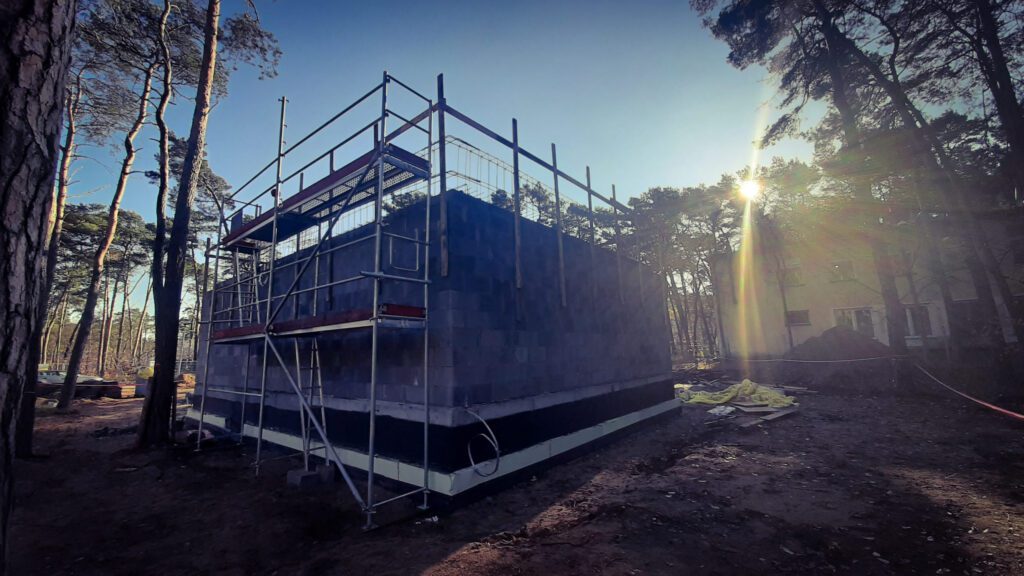
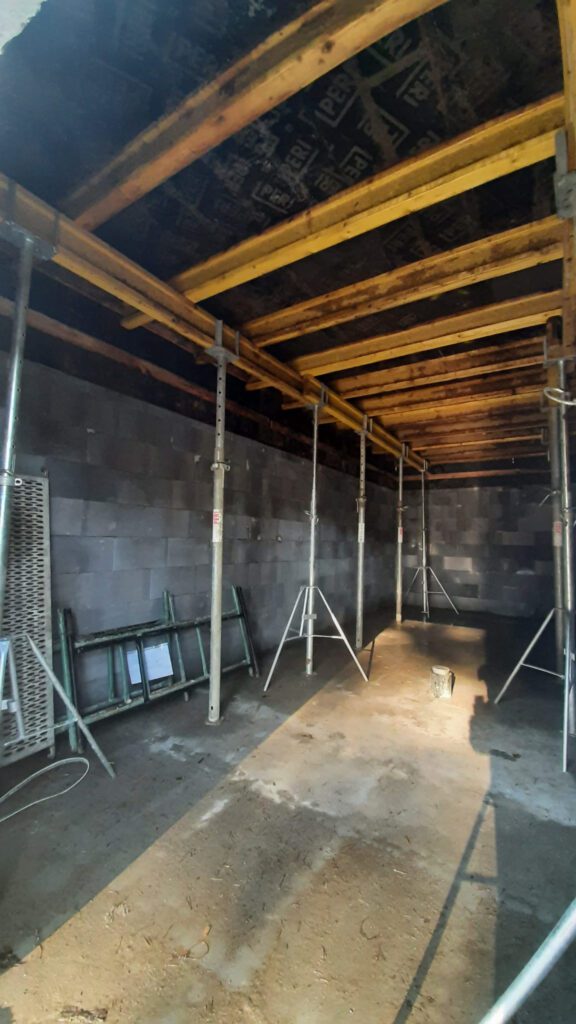
For several weeks, work has been underway on a new oxygen plant, located near the main entrance to the hospital grounds. The foundation has been poured, and the walls are being constructed. Soon, the completed facility will supply medical gases to the hospital wards. The existing oxygen plant is in poor condition and is located on land designated for expansion. It will be demolished after the new building is commissioned and brought into service.
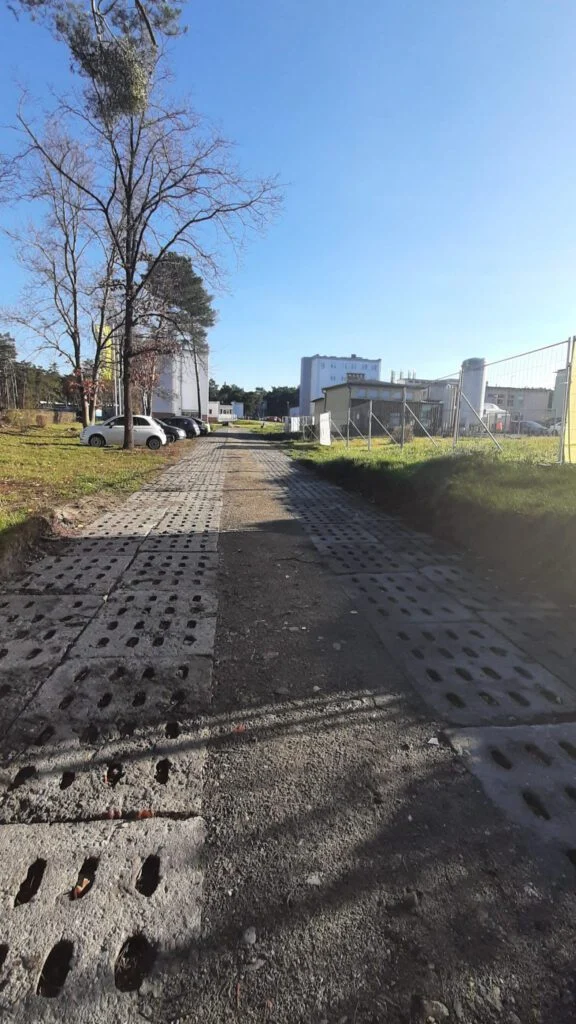
Around the building scheduled for demolition, where new structures are planned, a temporary access road has been constructed for construction vehicles, and a construction site compound has been set up in the southern part of the hospital grounds.
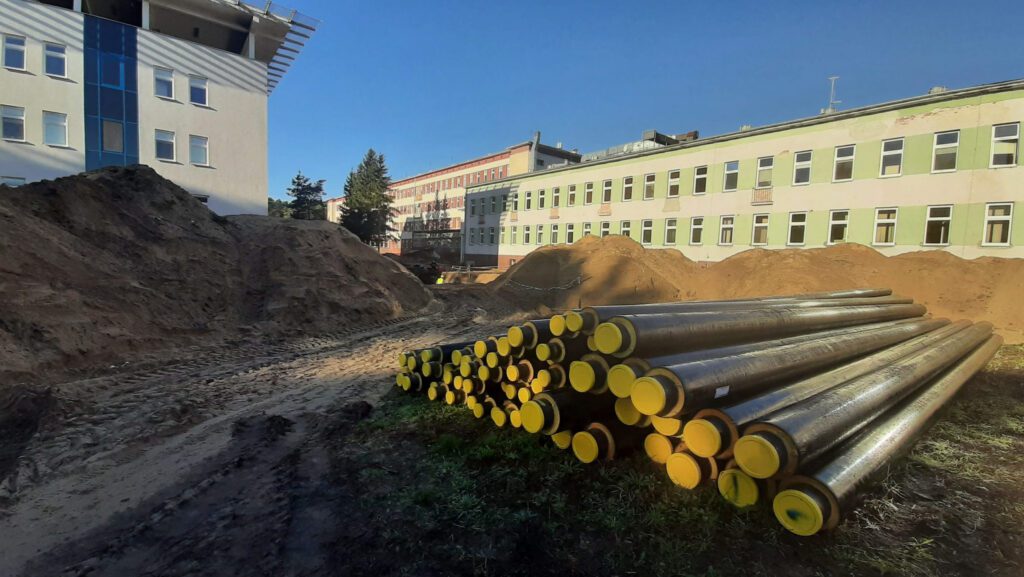
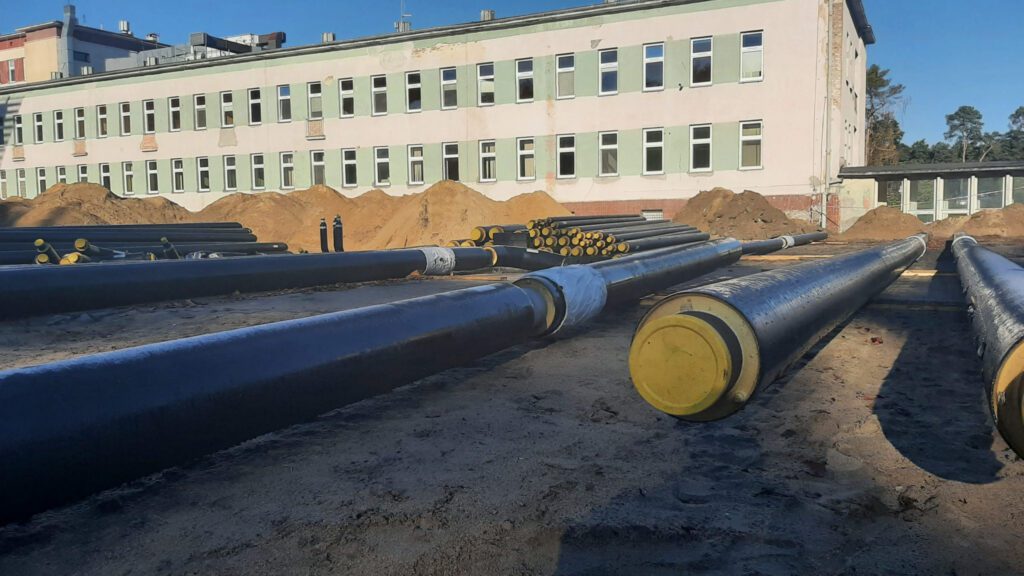
Intensive work is underway on the external network infrastructure to ensure a seamless supply of utilities to the hospital and to provide the newly constructed buildings with the necessary power. This requires the installation of new lines to replace the existing ones, providing the increased capacity needed to support modern healthcare operations. It’s important to remember that the expanded hospital is not just about the buildings themselves, which need heating and utility connections, but also about the modern equipment, which requires a reliable power supply. Consequently, two standalone transformer substations have been designed; one will serve as the hospital’s primary power source, while the other will function as a secondary substation. The main substation will receive power from two independent cable lines – to enhance the hospital’s energy security. Power will then be transmitted from this substation to the second substation via two cable lines. Both units will also be equipped with backup generators to provide emergency power.
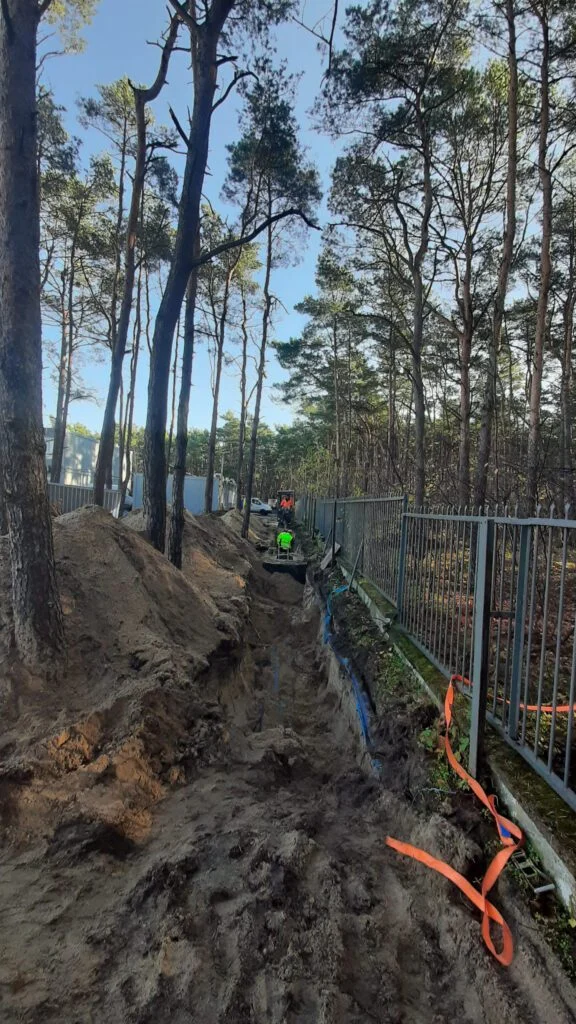
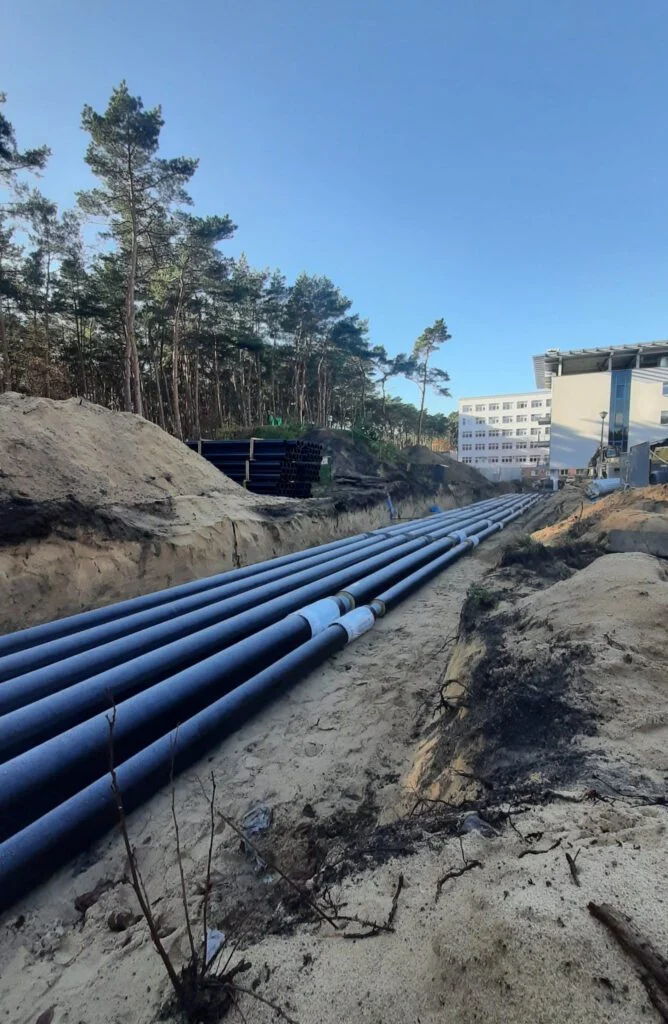
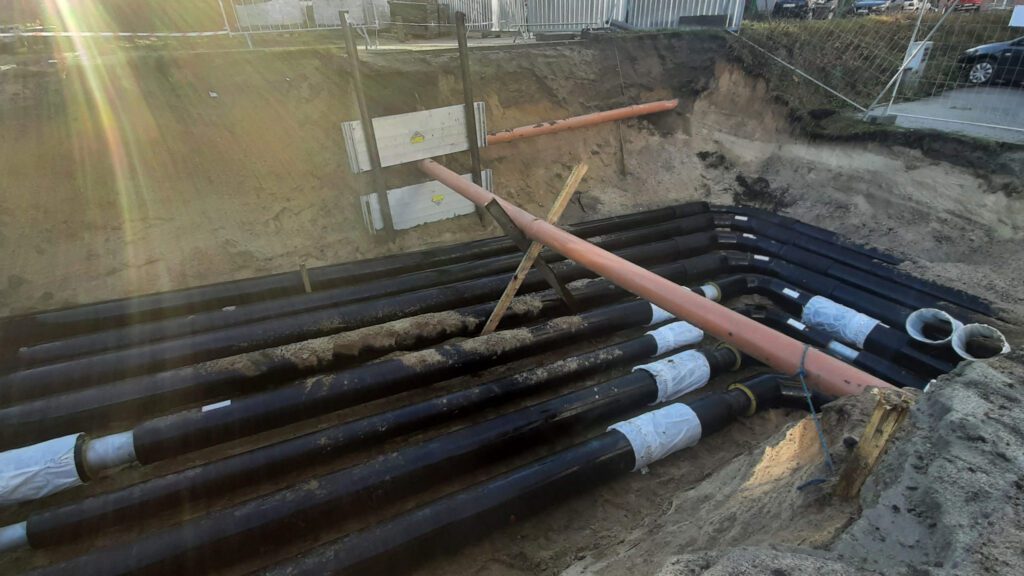
Simultaneously, work is underway on water, sewage, and district heating infrastructure. The new district heating network within the hospital will draw heat from the city’s Zazamcze network, but the hospital also has a gas boiler, which serves as a backup source of heat.
A water reservoir has also been designed to ensure the availability of drinking water and water necessary for firefighting purposes.
In the coming weeks, the initial phase of the work will be completed, and demolition work will begin, paving the way for the construction of the building.